wringer-board
One page that tells you what is actually done — and shows you the proof.
Real pages sit beside this one, produced by wringer-board render against
bundles a real Wringer run wrote. None
is a mock-up. These two lead because they are the two that sell; seven more,
one per kind of refusal the engine can raise, landed with slice
S2 and every value on them but one came from a real run.
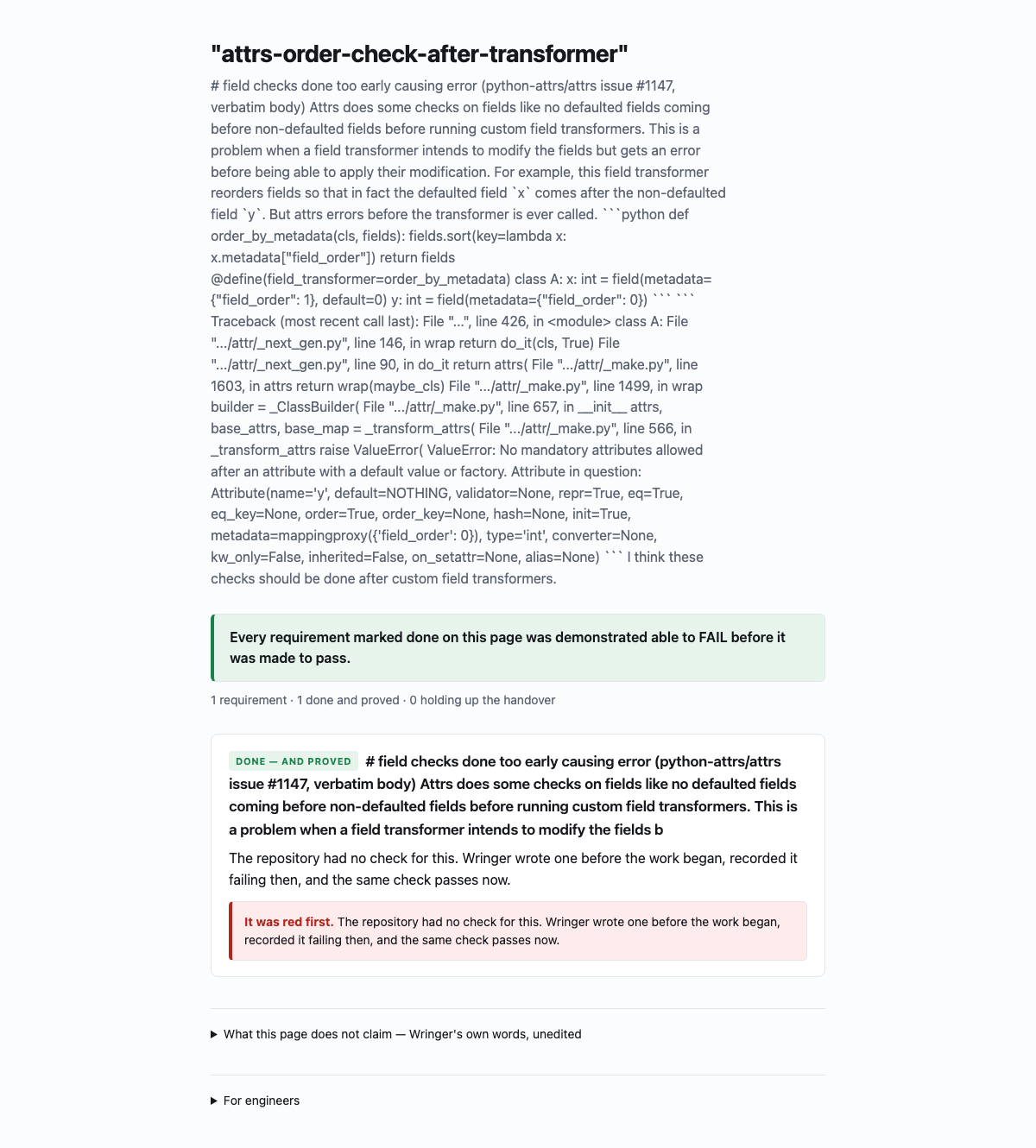
- A requirement that is done, and proved — from the corpus re-test of 2026-08-16. One card, DONE — AND PROVED, and the hero: “It was red first. The repository had no check for this. Wringer wrote one before the work began, recorded it failing then, and the same check passes now.” The promise is earned, so it renders.
- The same board when the evidence is not there — the promise withheld, the cause rendered in the engine’s own words because this board has no plain-English wording for it yet, and no hero box.
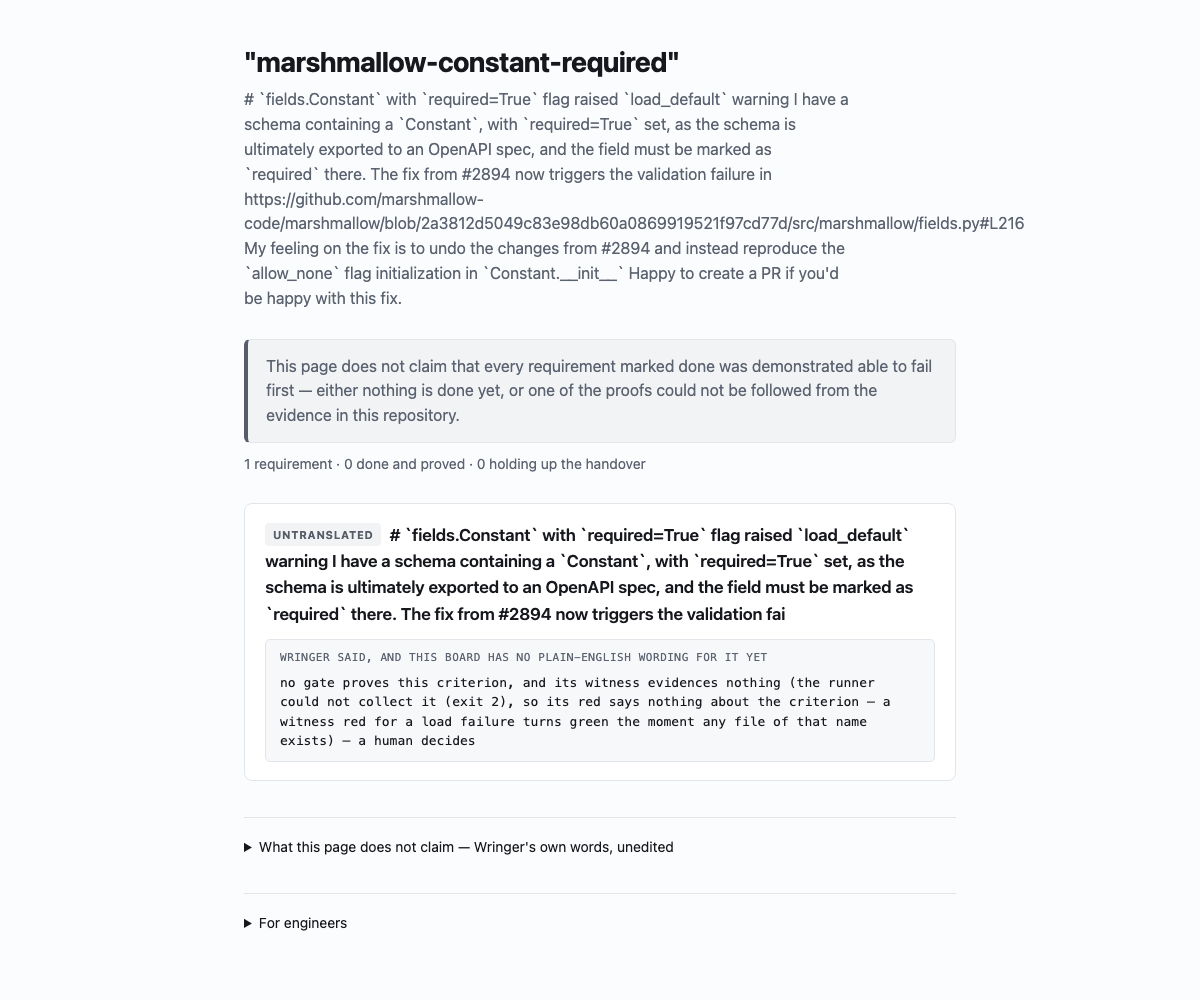
The second page is the more important one. A surface that only looks good on its best day is a brochure. These two were published together, on a day the programme’s headline claim was withdrawn after losing its own pre-registered test.
What happened in the round, family by family
The two pages above are about requirements. A run also produces facts that
belong to no single requirement — how the loop ended, whether the checks were
shown to be capable of failing, what wring audit made of the signature. Slice
S2 gives each of those a sentence a PM can read, and these are one page per
family, so the wording can be judged rather than described:
- How the loop ended
- Whether the checks could have failed
- Whether a check has stopped being able to fail
- Signature, identity and integrity — as
wring auditreported them; this board does not assess them itself - When the record has been altered
- How a fleet of tasks came out
- A word this board has no wording for yet — shown in the engine’s own words rather than hidden
Absence is not on this list, and that is the point. Where an artifact was never written, the page says nothing about that family — it does not say “unsigned”, “unhealthy” or “not measured by us”. A missing measurement and a bad verdict are different facts, and rendering one as the other is the failure this whole layer exists to avoid.
The ceiling, said here rather than buried
A check that was demonstrated able to fail, and then made to pass, is real evidence and much better than a check that has only ever been green. It is not a guarantee that the work is right. Where a requirement was written vaguely, the check inherits that vagueness — and the run these pages come from measured exactly that, twice in each direction.